
Ayan Majumdar
Ph.D. Candidate in Computer Science
Max Planck Institute for Software Systems
Saarland University
Biography
I am a Ph.D. candidate and Doctoral Researcher in Computer Science at the Max Planck Institute for Software Systems and Saarland University, Germany. I am jointly advised by Prof. Isabel Valera and Prof. Krishna Gummadi.
I am passionate about bridging the gap between theoretical research in fairness, causality, and explainability and the practical deployment of safety-compliant Automated Decision-Making and Generative AI systems. Prior to my Ph.D., I completed my Master’s thesis titled “On Computing Counterfactuals for Causal Fairness” with the Networked Systems Research Group, supervised by Prof. Krishna Gummadi and Prof. Isabel Valera.
I have also been fortunate to have collaborated with several incredible mentors: Preethi Lahoti (Max Planck Institute for Informatics), Prof. Dietrich Klakow (Spoken Language Systems, Saarland University), Prof. Adrian Weller (University of Cambridge).
- AI Safety
- LLMs & VLMs
- Fairness
- Explainability
- Causality
-
Ph.D. in Computer Science, (ongoing)
Saarland University and Max Planck Institute for Software Systems, Saarbrücken, Germany
-
M.Sc. in Computer Science, 2021
Saarland University, Saarbrücken, Germany
-
B.Tech. in Electronics and Communication Engineering, 2015
Heritage Institute of Technology, Kolkata, India
Recent News
- Preprint alert! 🚨 New work on whether foundation models can moderate online content — comparing instruction- vs. example-driven approaches. Check it out here.
- New publication! 🎉 Our work on revisiting personalization in algorithmic recourse has been accepted at ACM FAccT 2026! Check it out here.
- New publication! 🎉 Our benchmark study on evaluating LLMs for detecting demographic-targeted social bias has been accepted at IAAI @ LREC 2026! Check it out here.
- New publication! 🎉 Our work on operationalizing disparities in non-binary treatment decisions has been accepted in the AAAI 2026 AI For Social Impact Track! Check it out here.
Skills
5+ years experience building scalable research pipelines.
Expertise in LLM/VLM inference, prompt optimization, and safety-critical applications.
Specialized in fairness, explainability, and aligning models with compliance frameworks.
Deep experience in causality, explainability, and evaluating automated decision-making systems.
Advanced statistical analysis and visualization of large-scale real-world data.
Research and industrial experience in developing novel methods and evaluation benchmarks.
Recent Publications
Education
Graduate student in computer science with a strong focus on machine learning/artificial intelligence.
- Grade: 1.2 / 1.0 (German scale)
- Core courses: Artificial Intelligence, Information Retrieval and Data Mining, Machine Learning
- Advanced courses: Statistical Natural Language Processing, Neural Networks: Implementation and Application, High-level Computer Vision, Methods of Mathematical Analysis, Statistics with R, Human-centered Machine Learning, Machine Learning in Cybersecurity, Information Extraction
- Seminars: Machine Learning
Undergraduate student of electronics engineering.
- Grade: 8.8 / 10
- Core courses: Signals and Systems, Digital Electronic and Integrated Circuits, Analog circuits, Control System, Digital Communications, Analog Communications, Digital Signal Processing
- Elective courses: Microprocessor and Microcontrollers, Data Structures and C, Information Theory and Coding, Object Oriented Programming, Microelectronics and VLSI Design, Embedded Systems, Database Management Systems
Experience
Research student working in the topics of fairness in generative models, with a particular focus on variational autoencoders.
- Worked on estimating, quantifying and mitigating bias in variational generative models.
- Additionally explored the potential of using such models in a range of applications: anomaly detection, adversarial example detection and defense, classifier calibration.
- Designed a system based on variational autoencoders to generate counterfactual data for fairness scenarios under minimal causal assumptions.
- Supervisors: Prof. Krishna Gummadi, Prof. Isabel Valera
Worked as a part of the project on Mutual Intelligibility and Surprisal in Slavic Intercomprehension.
- Data collection and cleaning through web crawling and multi-sentence alignment for multilingual NLP experiments.
- Worked on developing the web-based application of the linguistic experiment to assist in user studies.
- Supervisor: Prof. Dietrich Klakow
Worked as part of the Engineering Services Communication Products group. Responsibilities.
- Development and maintenance of the flagship Session Border Controller (SBC) for a reputed US client.
- Develop core functionalities of the system using the knowledge of SIP (Session Initiation Protocol) and VoIP (Voice over IP).
Worked on developing, optimizing and testing a novel community-based routing algorithm usingsocial metrics for message transmission in delay-tolerant networks in post-disaster scenarios.
- Supervisor: Prof. Tamaghna Acharya
Related Projects

ModerationBench: Can Foundation Models Moderate Online Content?
A benchmark and evaluation framework comparing instruction- vs. example-driven VLM approaches for automated content moderation policy operationalization.
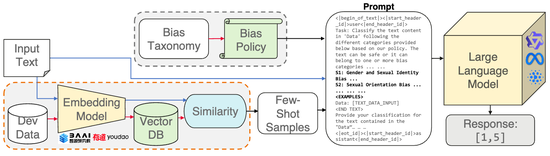
Evaluating LLMs for Demographic-Targeted Social Bias Detection: A Comprehensive Benchmark Study
We conduct a comprehensive benchmark study evaluating LLMs for demographic-targeted social bias detection in raw text data, revealing that while certain configurations show promise for scale, significant performance gaps persist across complex social categories.
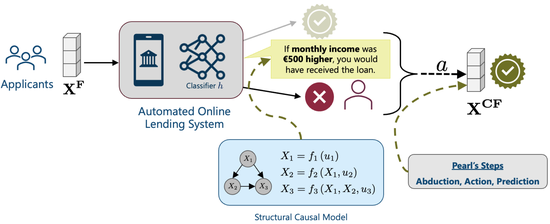
CARMA: Causal Algorithmic Recourse with (Neural) Model-based Amortization
We explore improving the practicality of providing causal recourse explanations through a novel neural network model-based automation framework.
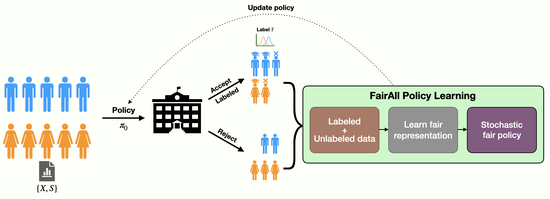
FairAll: Fair Decisions With Unlabeled Data
We explore the helpfulness of unlabeled data for fair, optimal and stable decision-making in societal settings.
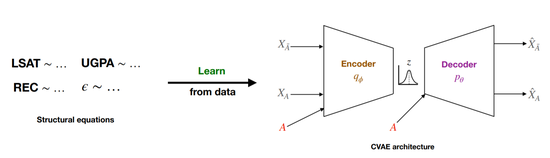
Generating Counterfactuals for Causal Fairness
Project that was conducted as part of my Master’s thesis to explore the application of generative models to compute counterfactuals for fairness.
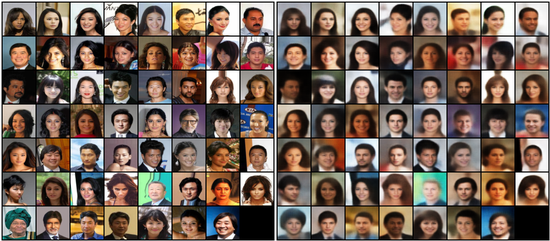
Bias in Generative Models
This project explores the case for potential bias in generative models such as variational autoencoders. The project also briefly looks at ways to mitigate such bias.
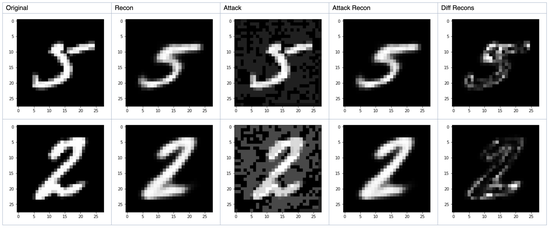
Using VAE for Robustness
Exploring potential use cases of variational autoencoders in the context of robustness of ML systems.
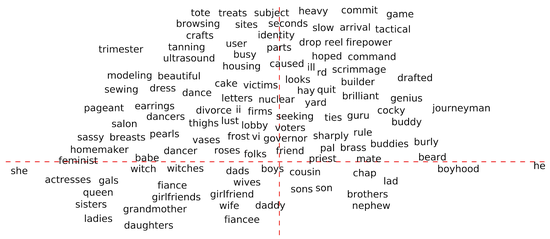
Debiasing Word Embeddings
Mini-project that looks at potential bias in pre-trained word embeddings and methods on how to remove such bias.
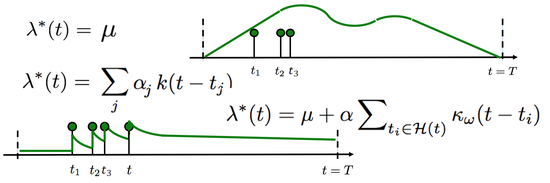
Temporal Point Processes and Smart Broadcasting
Project that explores various algorithms in temporal point processes. Also explores one potential use-case in smart broadcasting of messages.

Predicting Vulnerability of Windows Machines to Malware
This is a data-science project that aims to predict which Windows machines are more prone to malware attacks. I show the application of various different methods for the task and give a comparative analysis between them.
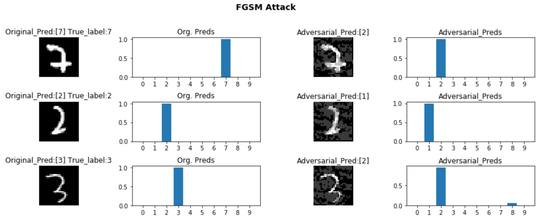
Adversarial Attacks and Defense for CNN
The project explores CNN classification models and their vulnerability to various adversarial attacks. Also explores a defence mechanism for it.
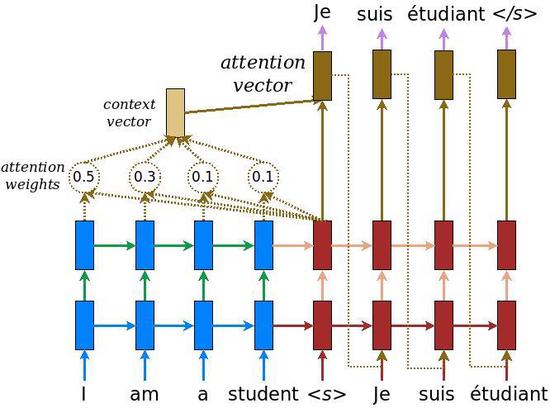
Neural Machine Translation
A mini-project that looks at the task of neural machine translation using sequential models and attention mechanism.
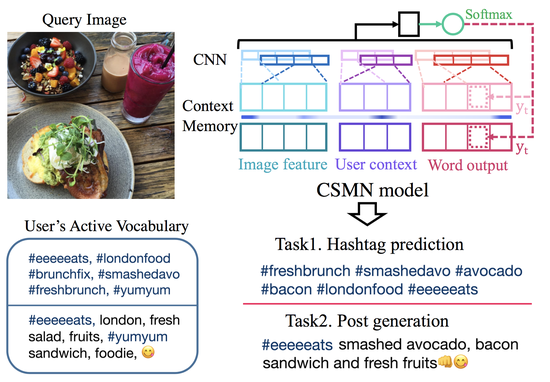
Exploring Personalized Image Captioning
This project explores personalization of generating image captions. We explore different architecture choices of Attend2u and also analyze personalization of the captions.
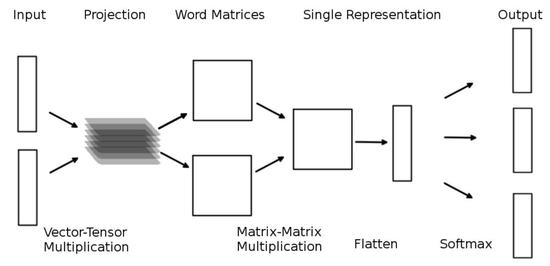
Word2Mat: A New Word Representation
This project explores a novel embedding technique for words into matrices instead of vectors. We explore this novel embedding method and how it could improve contextual sense.
Recent & Upcoming Talks
Certificates

Teaching
Awards & Achievements
- Awarded scholarship for fee waiver to attend the Nordic Probabilistic AI Summer School (ProbAI) (June 2021).
- Invited to attend Microsoft Research conference Frontiers of Machine Learning (July 2020).
- Selected for research assistantship at the Max Planck Institute for Software Systems (October 2019).
- Won Spot Award and Insta Award at Infosys Ltd. for outstanding performance and contribution to the project.